Buying a gemstone ring online is a leap of faith, but not a blind one. You cannot slide it onto your finger, tilt it under a window, or read the seller's expression when you ask an awkward question. What you can do is slow down at the handful of points where most buyers slip. The mistakes below come up again and again, and each one has a fix you can apply in a few minutes.
Ordering a size you have never measured
Guessing is the most common error, and the most expensive to fix. Ring sizes are not interchangeable between countries or even between jewellers, and the difference between two sizes is only a millimetre or so. A ring that feels fine in a cold kitchen can feel tight after a warm walk.
Measure the finger you will actually wear it on, at the end of the day when fingers are at their largest, and do it two or three times on different days. If you are between sizes, go up rather than down — a slightly loose ring can be adjusted, a tight one just sits in the box. Wide bands, stackers and rings worn on the thumb usually need a little more room. A high-street jeweller will size you in seconds, and it is worth the trip even if you buy elsewhere.
Before ordering, ask whether the design can be resized at all. Full eternity bands and rings set with stones all the way around often cannot, and many gemstones dislike the heat involved in resizing.
Choosing a stone that will not survive everyday wear
Hardness is not the same as toughness, and both matter. On the Mohs scale, diamond sits at 10, ruby and sapphire at 9, quartz-family stones such as amethyst and citrine at 7, and pearls, opal and tanzanite lower still. Everyday grit contains quartz, so a stone below 7 will gradually dull and scratch if worn constantly.
Toughness is about how a stone copes with knocks. Emerald has good hardness but is often included, which makes it brittle. Tanzanite has a natural cleavage plane and can split. Opal and pearl are sensitive to chemicals, perfume, chlorine and dry heat. An amethyst ring worn a few evenings a month is a different proposition from a ring worn through gym sessions, gardening and washing up.
- Everyday wear: sapphire, ruby, diamond, and well-cut spinel are sensible choices.
- Occasional wear: emerald, tanzanite, opal, moonstone and pearls are lovelier than they are durable.
- Care questions: ask whether ultrasonic or steam cleaning is safe for that specific stone. Much jewellery advice online assumes diamond, and it does not transfer.
Skimming the returns and resizing terms
Read the returns policy before you fall for a stone, not after. Look for the return window, who pays return postage, whether the item must be unworn with tags attached, and whether made-to-order or engraved pieces are excluded — they usually are. Check for restocking fees and whether refunds are issued to the original payment method.
Where is the seller based? A ring travelling back across a border can mean customs paperwork, longer waits and postage that costs more than you expect. Keep the listing details and your order confirmation until you are certain you are keeping the ring. On a purchase of this size, it is also worth checking the import duty and VAT rules for your country with the relevant tax authority rather than relying on what a listing says.
Trusting the photographs more than the description
Screens vary, and studio lighting flatters. A sapphire photographed under a bright lamp can look two shades lighter than it does on a grey Tuesday. Ask for a short video in daylight and a photograph of the ring on a hand, so you can judge scale and colour together.
Then read the small print with real attention. Is the stone heated, oiled, dyed or fracture-filled? Treatments are not automatically a problem, but they affect price, durability and how the ring should be cleaned. Is the stone pictured the actual stone you will receive, or a representative image? Are the gemstone measurements given in millimetres as well as carats? Vague listings tend to stay vague when you ask questions later, which tells you plenty.
Forgetting the setting, the metal and the care
A beautiful stone in a flimsy setting is a repair bill waiting to happen. Count the claws, check how thick they are, and think about how high the stone sits — tall settings catch on scarves, coat sleeves and car doors. A bezel or a lower profile protects a softer stone far better.
Metal matters too. Silver is soft and scratches; white gold is usually rhodium-plated and will need re-plating over time; platinum is dense and hard-wearing but heavier on the wallet. If the ring will sit next to a wedding band, ask how the two will sit together rather than assuming.
Letting the discount do the thinking
A crossed-out price is a marketing device, not a valuation. Gemstones can be lovely, meaningful and worth every penny, but outside the very top of the market they are not a reliable investment, and nobody should buy a ring as one. Decide what you want to spend, then find the best ring at that figure.
Before you click buy: a short checklist
- Size measured properly, more than once, with a note of the scale used.
- Stone hardness and toughness suited to how often you will wear it.
- Returns window, return postage and exclusions understood.
- Extra daylight photos and a video requested.
- Treatments, exact stone and millimetre measurements confirmed in writing.
- Setting, metal and cleaning instructions checked.
Do those six things and the ring that arrives will almost certainly be the one you pictured. And if a seller is evasive on any of them, that is your answer — there are plenty of honest jewellers who will happily answer every question twice.
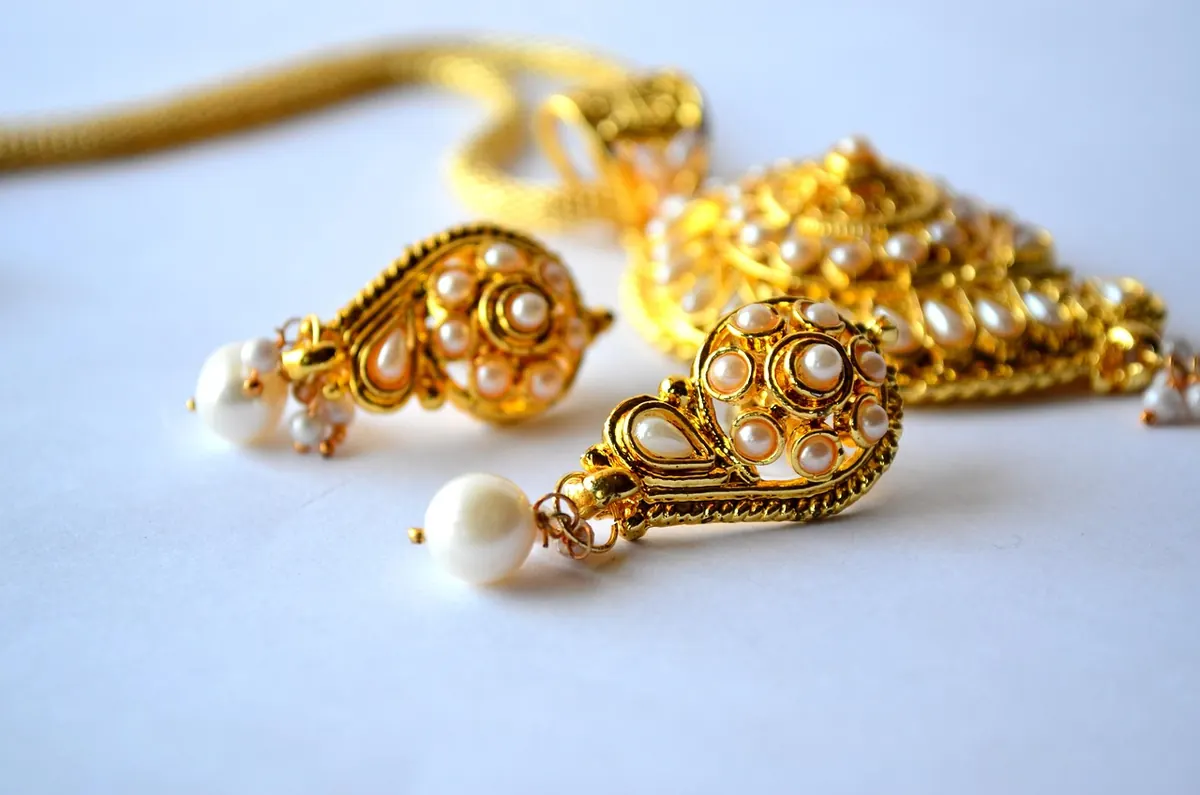
Photo: jeanborges / Pixabay