A ring leads a hard life. It knocks against door handles, sits under running taps, gets dragged through coat sleeves and tapped against desks all day. Earrings and pendants have it easier, but a bracelet takes more punishment than almost anything else in the jewellery box. That is why gemstone hardness matters more than most buyers expect. Two stones can look equally lovely, yet only one will still look crisp after a decade of daily wear. Here is how to tell the difference before you buy.
Nothing about hardness shows up in a shop window. An opal and a sapphire can sit side by side under the same lamp, both beautifully polished, both in the same price bracket. A year later the sapphire looks exactly as it did on the day it was bought, while the opal has gathered a fine haze of surface scratches from a car key and a kitchen worktop. Hardness is the number that predicts which of those two futures you are choosing.
What the Mohs scale actually measures
The scale was devised by the German mineralogist Friedrich Mohs in the early nineteenth century. He arranged ten reference minerals in order of which could scratch which, from talc at 1 to diamond at 10. It is a scratch test, nothing more.
Those ten minerals are still the anchor points used today:
- Talc
- Gypsum
- Calcite
- Fluorite
- Apatite
- Orthoclase feldspar
- Quartz
- Topaz
- Corundum
- Diamond
Every gemstone is rated by comparison with that ladder. If a stone scratches fluorite but is scratched by apatite, it lands somewhere between 4 and 5. A set of hardness pencils, each tipped with one of the reference minerals, is still the low-tech way to do it in the field.
Where everyday gemstones sit
You do not need to memorise the whole scale, but it helps to know roughly where the stones you are considering fall.
- 10 — diamond
- 9 — ruby and sapphire (both corundum)
- 8.5 — alexandrite
- 8 — topaz, spinel
- 7.5 to 8 — emerald, aquamarine
- 7 to 7.5 — amethyst, citrine, smoky quartz, tourmaline
- 6.5 to 7 — jadeite, peridot, tanzanite, zircon
- 5.5 to 6.5 — opal, moonstone, turquoise, lapis lazuli
- 2.5 to 4.5 — pearl, coral, amber
The important detail is that the scale is ordinal, not linear. Diamond is not ten times harder than talc — in absolute terms it is thousands of times harder. Corundum at 9 will scratch topaz at 8, and nothing except another diamond will scratch a diamond. That gap between 9 and 10 is enormous, which is one reason sapphires and rubies have been the everyday luxury stone for centuries.
For jewellery, one number does most of the work: 7. Household dust contains tiny particles of quartz, which sits at 7 on the scale. A stone softer than quartz will slowly pick up fine scratches from ordinary life — a dulling haze long before anything dramatic happens. So the practical question when choosing a piece is simple. Is the stone harder than dust?
Hardness is not the same as toughness
Two stones can share a hardness number and behave completely differently when knocked. Hardness is resistance to scratching. Toughness is resistance to breaking, chipping and cleaving. The two often get muddled together in buying advice, and the difference matters.
Emerald is a good example. At 7.5 to 8 it is technically harder than quartz, but emeralds almost always contain internal fractures and inclusions that make them brittle. Jade is the opposite case: jadeite sits at roughly 6.5 to 7 and nephrite at 6 to 6.5, yet its interlocking fibrous structure makes it one of the toughest materials used in jewellery. A jade bangle will shrug off a knock that would shatter a piece of quartz the same size.
Diamond is the other surprise. It is the hardest substance in the trade, but it has perfect cleavage in four directions. A sharp, well-aimed blow along one of those planes can split a diamond cleanly in two. Hardness protects a stone from the slow grind of daily life; it does not make it invincible.
Cleavage is the quiet risk
Tanzanite has a single direction of cleavage, so a sharp knock can split it clean. Topaz has perfect cleavage too, despite being a hard 8, which is why topaz is more prone to chipping at facet edges than its rating suggests. Opal, at 5.5 to 6.5, holds water within its structure and can develop fine surface cracks if it dries out or faces sudden temperature swings. Kunzite has excellent cleavage in two directions and will fade in strong sunlight. Moonstone, a feldspar with a well-developed cleavage, chips easily at the girdle.
Hardness tells you what will scratch a stone. Toughness tells you what will break it.
When a jeweller says a stone is "durable", it is worth asking which of the two they mean.
The daily-wear shortlist
If you want a piece you can put on in the morning and forget about, start here.
- Diamond. The obvious answer for a reason. Hard, takes a mirror polish, and holds a crisp facet edge indefinitely.
- Sapphire and ruby. Corundum at 9 is the best value in durable colour. Blue, pink, yellow, green and padparadscha sapphires all sit at the same hardness, so you are not trading durability for an unusual colour.
- Spinel. Often described as the great overlooked stone. Hardness of 8, no cleavage, bright colours and no treatment required in most cases.
- Alexandrite. At 8.5 it is one of the hardest coloured stones available, and it holds its colour-change magic for a lifetime of wear.
- Tourmaline and quartz. At 7 to 7.5 these are fine for earrings, pendants and dress rings. They will show wear on a ring worn every day for twenty years.
- Emerald. Acceptable in a ring if the setting protects the corners and you are prepared for a little care.
- Jade. Softer than quartz on paper but famously tough, which is why it survives centuries as a bangle.
- Opal, pearl, moonstone, turquoise and lapis lazuli. Beautiful, and best kept for earrings, pendants and occasional wear. Pearls in particular scratch, dull and react to perfume and hairspray.
Match the stone to the piece, not just to the person
Hardness advice only makes sense once you know what the piece is. The same stone can be a sensible choice in one setting and a poor one in another.
- Bracelets are the most exposed. They swing, clatter against desks and take the full force of every accidental knock, so this is where a hard, tough stone earns its keep.
- Rings take constant abrasion but usually in one direction, from the palm side of the band. A bezel or a halo setting that covers the edges of a softer stone can add years to its life.
- Earrings and pendants are the safest home for a soft stone. An opal drop that never touches anything will look new for decades.
- Men's rings take more punishment than most, because larger hands meet more doorframes and gym equipment. A flush-set or channel-set band in sapphire, spinel or diamond is a practical answer.
Ask yourself where the piece will spend its time before you ask how hard the stone is.
Living with a softer stone
Plenty of people fall for a stone that is not built for daily wear, and that is fine — as long as the care matches the choice. A few habits will keep a soft or brittle gem looking sharp for years.
- Put jewellery on last and take it off first. Perfume, hairspray, sunscreen and cosmetics do more damage to porous stones than any amount of wear.
- Treat cleaning differently for different stones. Diamond, sapphire, ruby and spinel tolerate an ultrasonic cleaner and steam. Emerald, opal, pearl, turquoise, lapis and tanzanite generally do not.
- Use warm water, a drop of mild soap and a soft brush for most coloured stones, then dry with a lint-free cloth.
- Store pieces separately. A diamond in the same pouch as an opal will scratch it. Individual soft pouches or a compartmented box solve the problem.
- Keep pearls and opals away from dry air and heat. Pearls like the moisture of being worn; opals dislike sudden temperature changes and very dry rooms.
- Remove jewellery for sport, gardening, cleaning and swimming. Chlorine and household chemicals are unkind to almost everything, including gold alloys.
- Check settings once a year. A loose claw is a bigger threat to most stones than a scratch will ever be.
Treatments are worth asking about too, because they can change the rules. Emerald is routinely oiled or filled to hide fractures, and that filling can be damaged by heat or strong cleaners. Rubies are sometimes glass-filled, which affects both value and durability. Fracture-filled diamonds need gentler handling than untreated ones.
A short buying checklist
- Decide what the piece is for before you fall in love with a stone.
- Check the hardness. Anything below 7 is a candidate for occasional wear.
- Ask about toughness and cleavage as well, especially for emerald, topaz and tanzanite.
- Look at the setting. Covered edges protect soft stones.
- Ask whether the stone has been treated, and how that treatment responds to heat and cleaning.
- Budget for care. Restringing pearls, checking claws and professional cleaning are part of owning jewellery.
None of this is meant to steer anyone away from a stone they love. A well-chosen opal or emerald can be worn for a lifetime in the right setting and the right rotation. What hardness gives you is a clear-eyed way to decide where a stone belongs — and how much of your everyday life it can honestly survive.
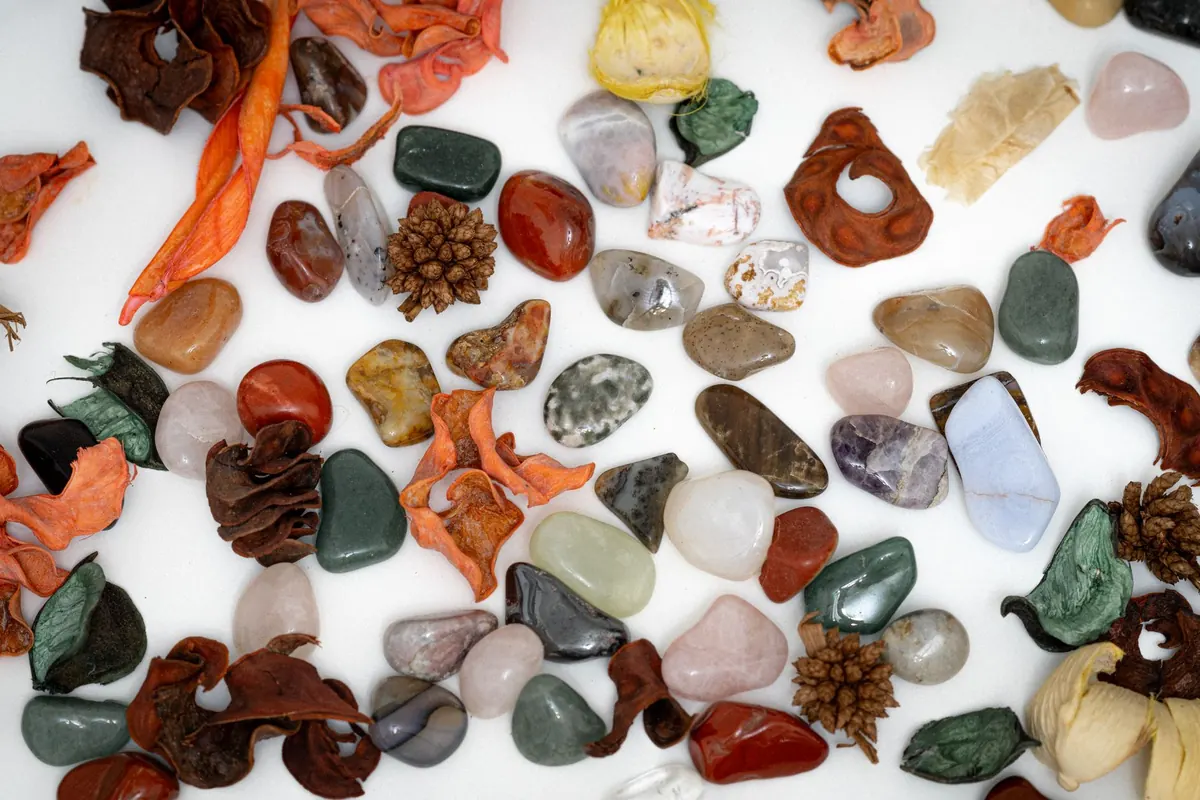
Photo: Mahmoud Yahyaoui / Pexels